Members
have their say

How are you building a sustainable floriculture sector?

The best sustainable innovations come from the floriculture sector itself. Growers are developing smart solutions for their own gardens or greenhouses, and scaling up to share their knowledge with more entrepreneurs. The Sustainability Award brings together the best developments in sustainability each year, the icing on the cake being a prize for the three best ideas. This award was presented to Little Spider, Holla Roses and J&P ten Have in November. How do they continue to work on the future of their sustainable plan? And are they creating new innovations?

Apply for the Sustainability Award 2026
Are you a member of Royal FloraHolland and do you have a sustainable or innovative solution? Small or large, every initiative counts. For more information and registration, visit our website.
Sign up and make a difference!

MEMBER SPEAKING

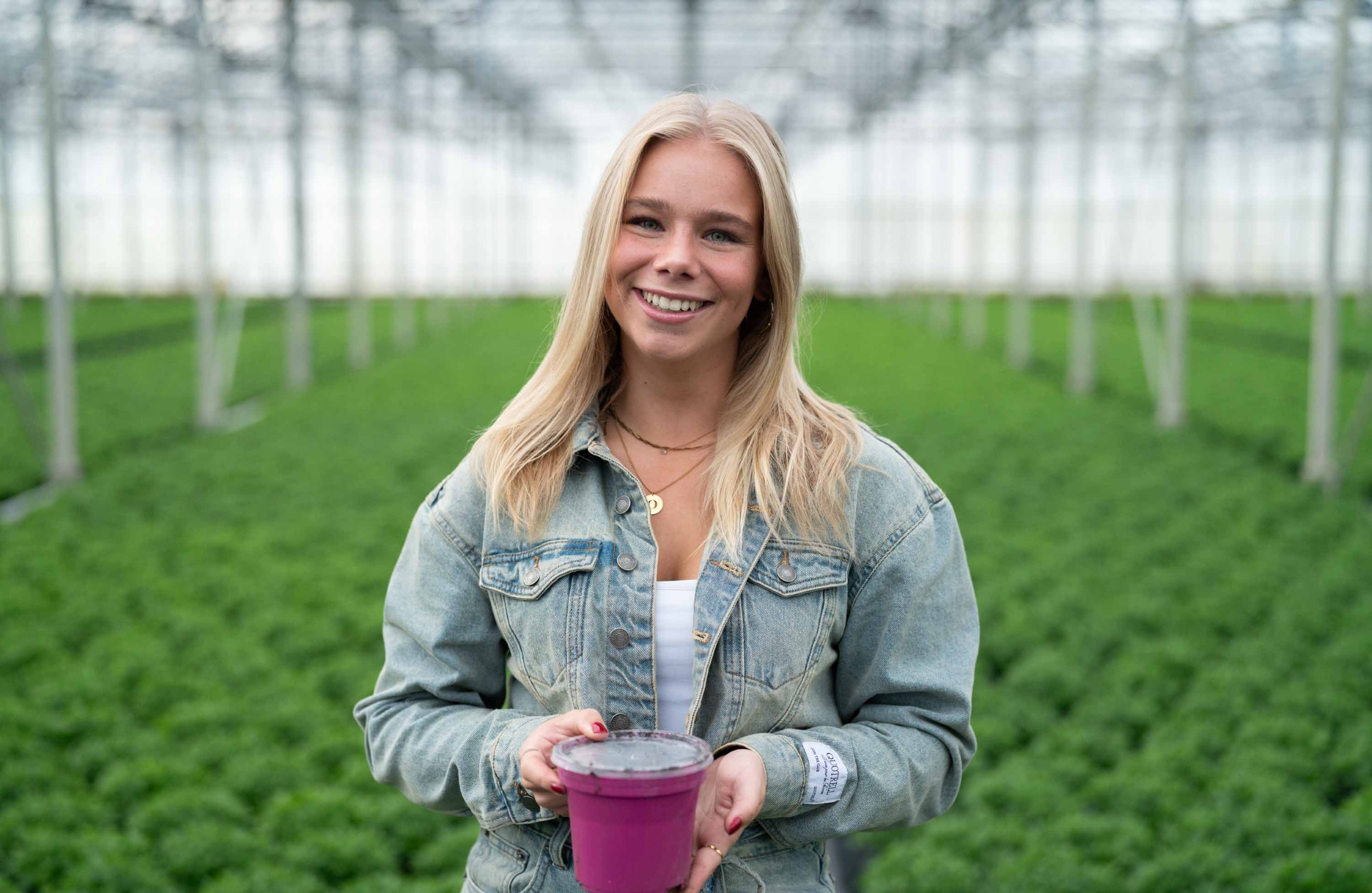
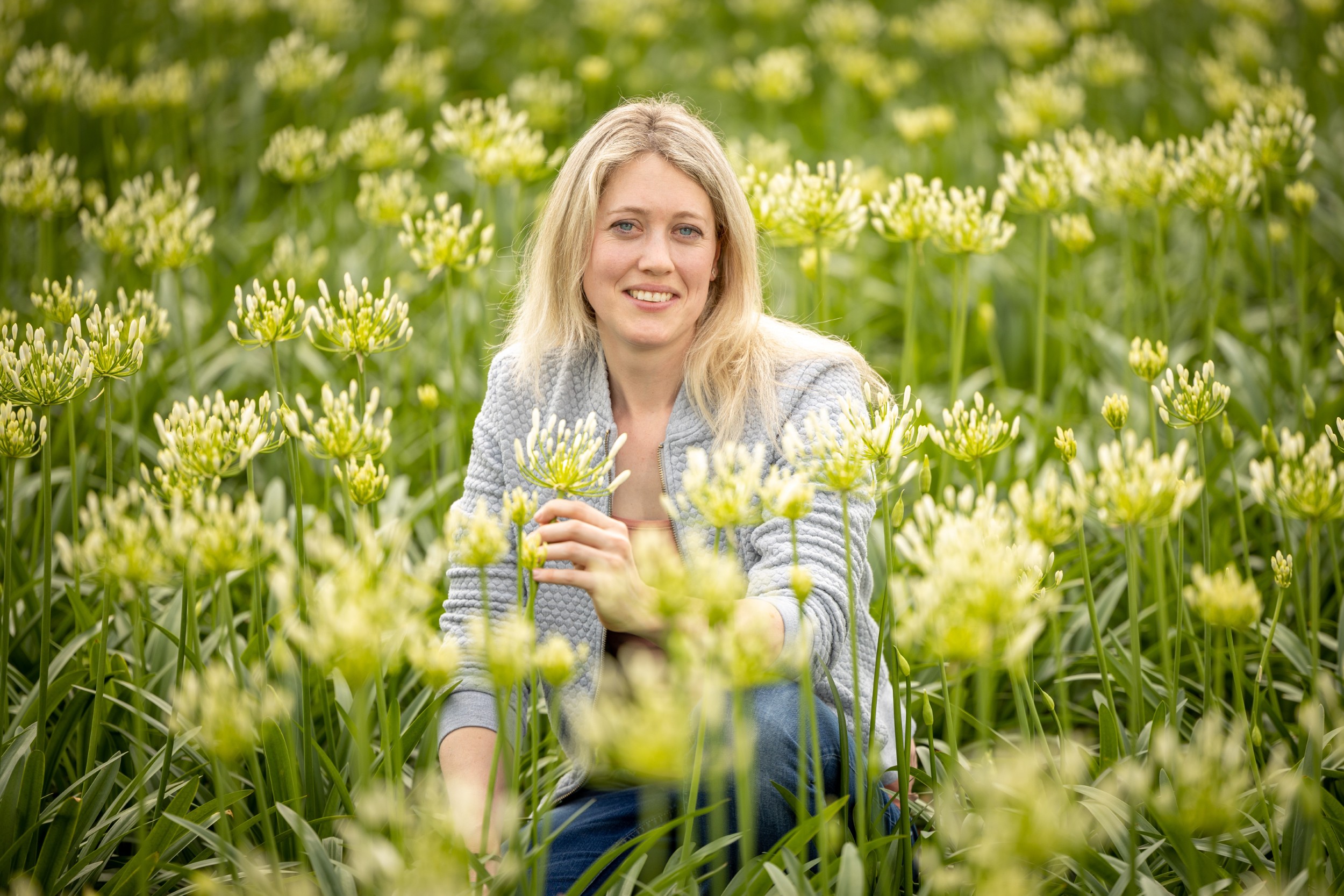
Fleur Bruinen

Little Spider

"We genuinely want to help growers."

Fleur: "During the first year and a half of our business, Little Spider really took off. We got more requests than we could handle. Now this flow has levelled off a bit. The Sustainability Award came just at the right time: it gives our name another boost. Moreover, we get to work with marketing agency Druktemaker on our brand awareness, which comes as part of the prize. For us, this is most welcome. We do not do acquisition. We do not approach growers to buy our product. When growers get started with Little Spider, they themselves must have confidence that it will work. After all, it takes a while before you really see any effect. You need to build a healthy population of spiders first. Little Spider is therefore not a quick fix for an infestation, but an investment in a healthy greenhouse system in the long term. Then, as a grower yourself, you must already be convinced that this suits your beliefs and way of working.

For me, it is important to stay true to ourselves in everything we say and do. Our intention is not to sell on a large scale. We genuinely want to help growers. If another way suits them better, that's also fine. In the coming period, we will continue to work on putting our company on an even firmer footing.  But we are also innovating. Currently what we are supplying to customers are spider nests. This is because spiders are cannibalistic.

However, the fact they are nests means it takes a long time before you have a full-fledged population and see any effects in the greenhouse. The eggs have to hatch, the spiders have to mature and reproduce again, etc. Therefore, we are now trying to grow individual spiders in a closed culture cell, which we can then deliver to our customers as fully matured spiders. This then allows the effect to be seen much faster. This is quite an exciting development for us and we are currently still in the experimental phase.

Furthermore, I am proud that we are continuing to broaden our customer base. This is how we managed to build a healthy population at a cactus grower. This was quite a challenge, as spiders largely prefer living in humid climates. One of our customers has now also started using our spiders in his third greenhouse, after the results in the first and second were so positive. You couldn't ask for a greater compliment. It just goes to show how well it works for this grower. The fact that we can do this with our small, young team day after day is a real win."

MEMBER SPEAKING

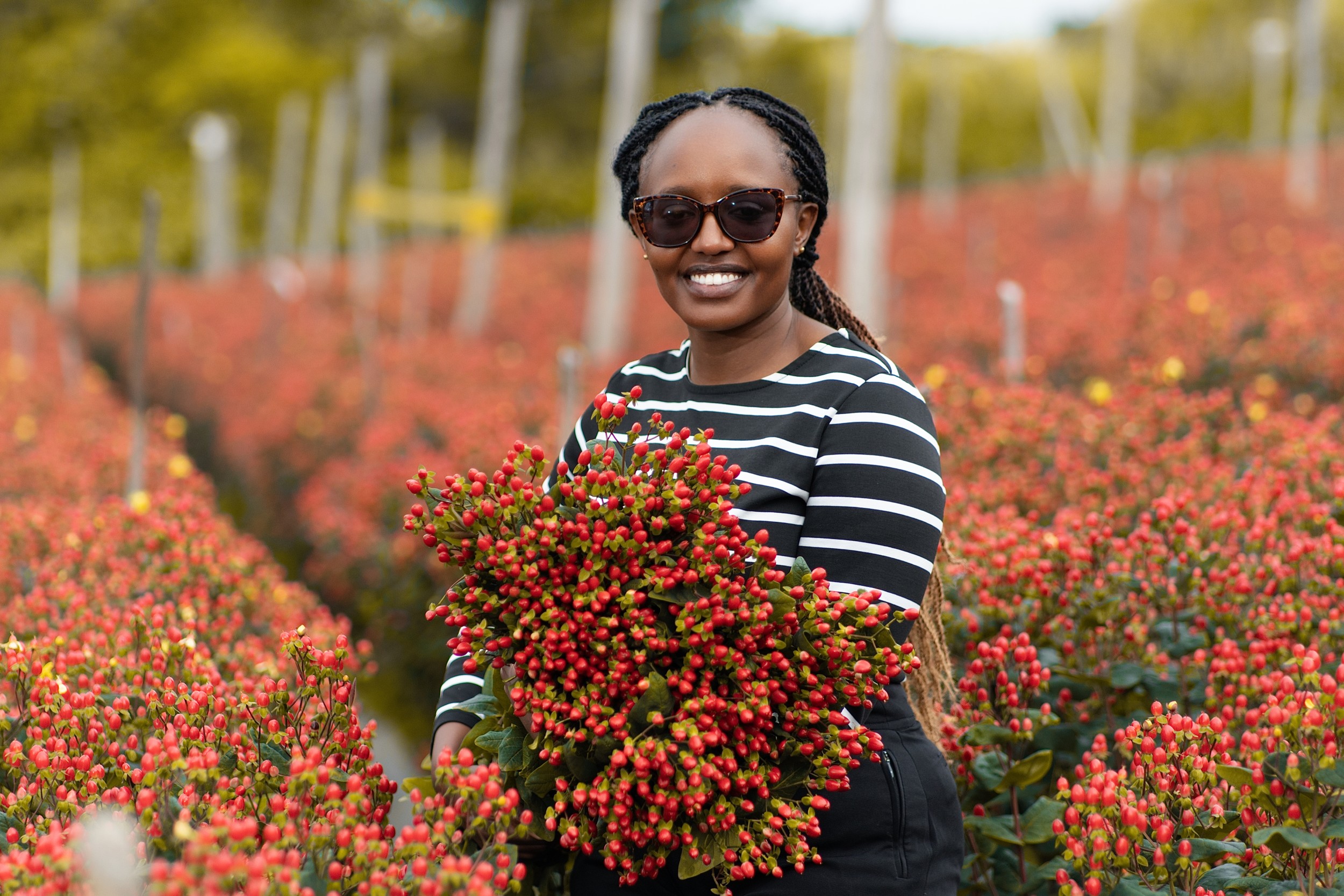
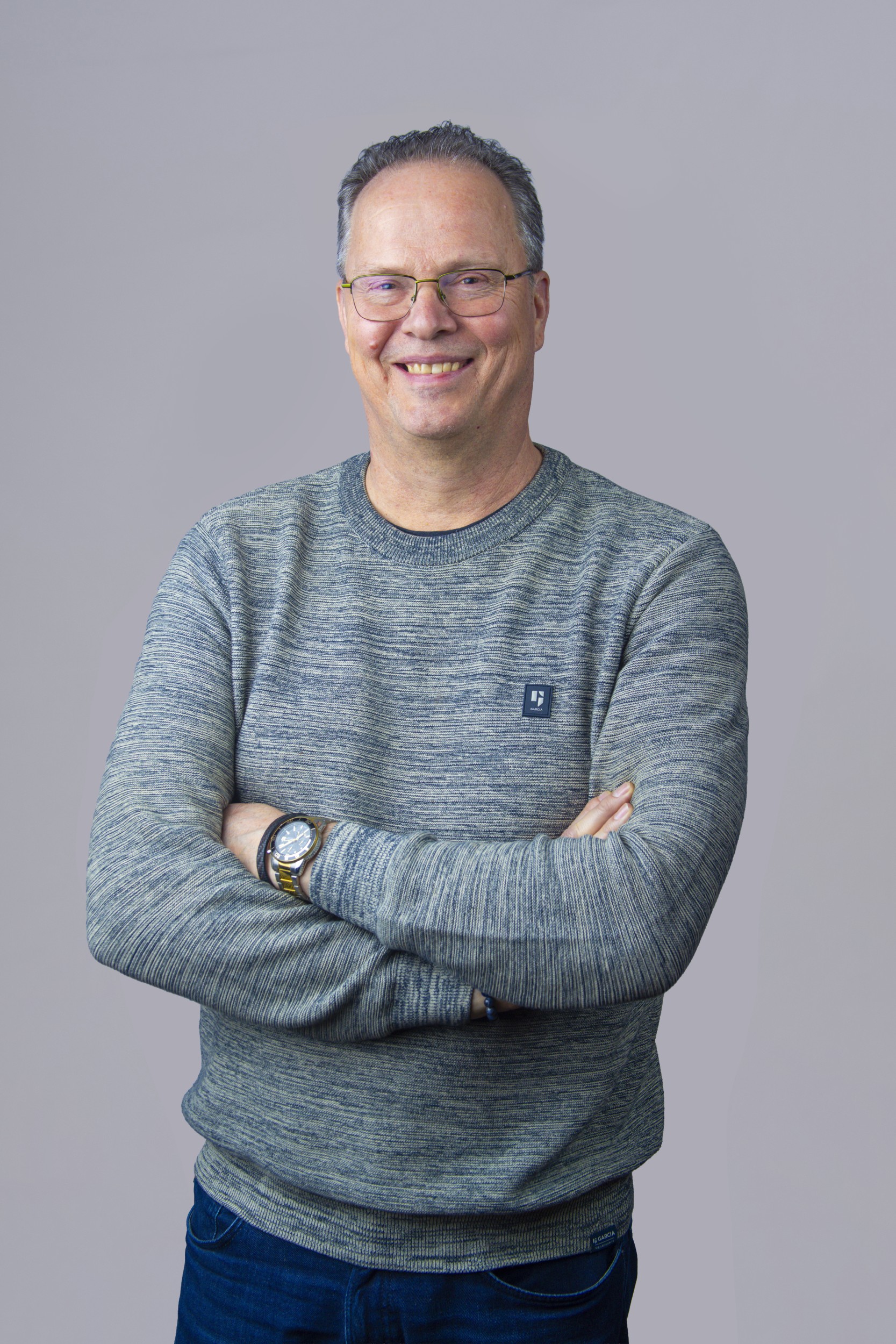
Ermiyas Solomon

Holla Roses BV / Ziway Roses PLC

Ermiyas Solomon is operations manager of Holla Roses BV/ Ziway Roses PLC in Ethiopia. His company shows that green waste from roses is not an end point, but a starting point. From this waste stream, the farm produces compost, vermicompost, biogas (methane) and liquid fertiliser.

Ermiyas: "Our idea is always: do what we do as well as possible. We will therefore use the coming period to further improve the reuse of cutting waste at the farm and further streamline our processes. For the most part, this has already worked out very well. I am no longer the only one who understands how it works. Our team can also do it, and even if I am not there for some reason, the process carries on. I'm proud of that.

But I am also always looking one step ahead. For example, we are now researching biochar (organic charcoal). This is a charcoal-like substance that you can use as a soil conditioner, a fertiliser and to purify water.

We are now researching how to produce this ourselves through the oxygen-free burning of green waste, using used motor oil as fuel. This way we kill two birds with one stone: the motor oil gets another use, and we ourselves produce a substance that is good for our roses. I also want to further digitise water management. We already have figures on quantity and quality, but there is room for improvement. In the coming years, we will modernise and digitise our wastewater management system to make monitoring even more efficient and accurate

I am honoured that we were awarded the second prize of the Sustainability Award. It gives us the opportunity to talk about what we do and how we do it, as well as show other growers that step-by-step sustainability is really very possible.

Sharing our experiences is always at the heart of Ziway Roses' strategy. We believe in learning from each other. Our door is always open - to fellow growers, government agencies or anyone interested. Sharing experiences helps us all move forward and helps us discover best practices. We work hard to be as sustainable as possible - for our employees, our community and the planet. We also need to keep talking about these efforts over and over again, because sustainability is a journey that never ends."

At Holla Roses in Ethiopia, every rose gets a second life. Discover how flower cultivation can be not only beautiful, but also sustainably grown.

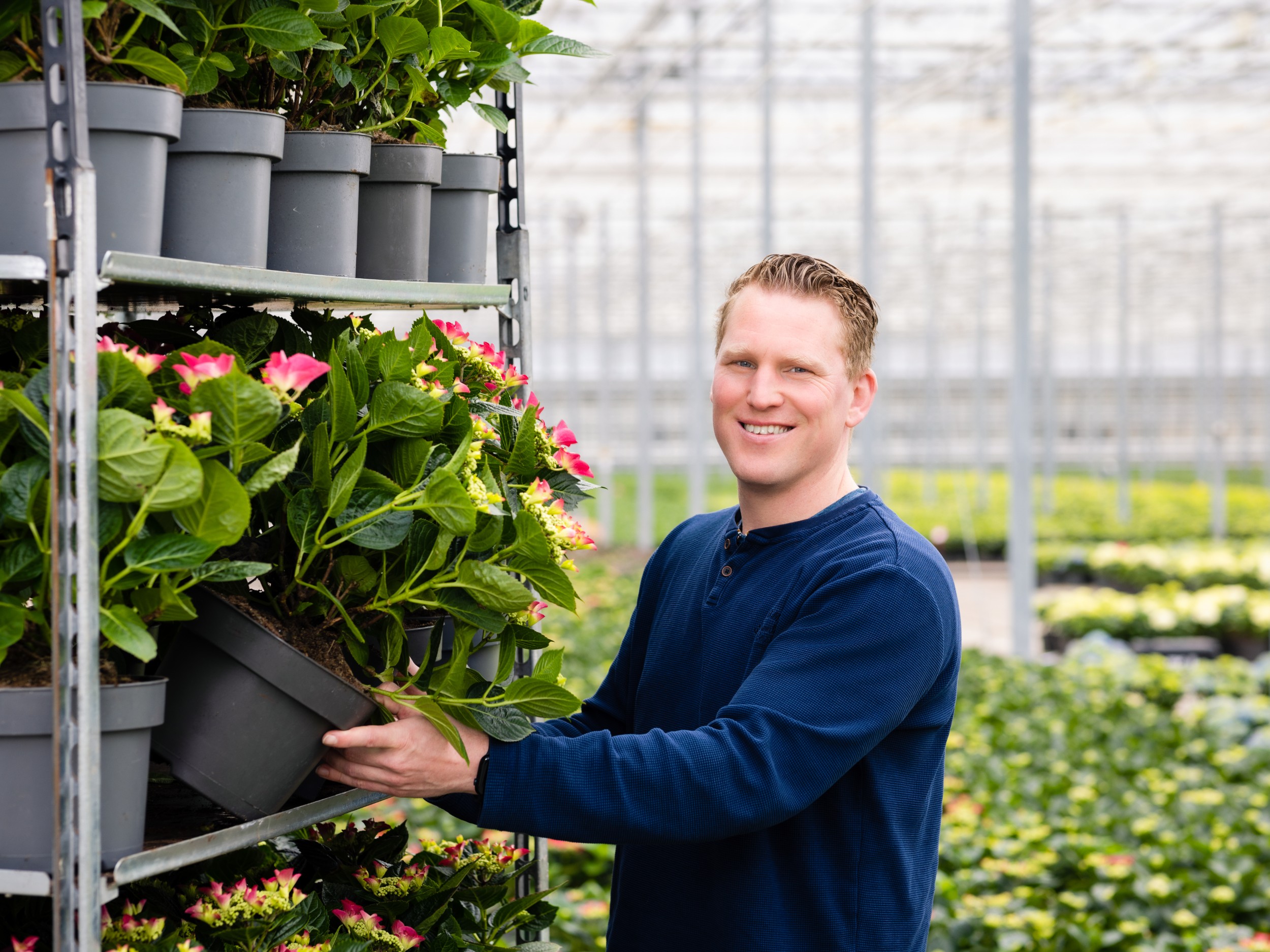
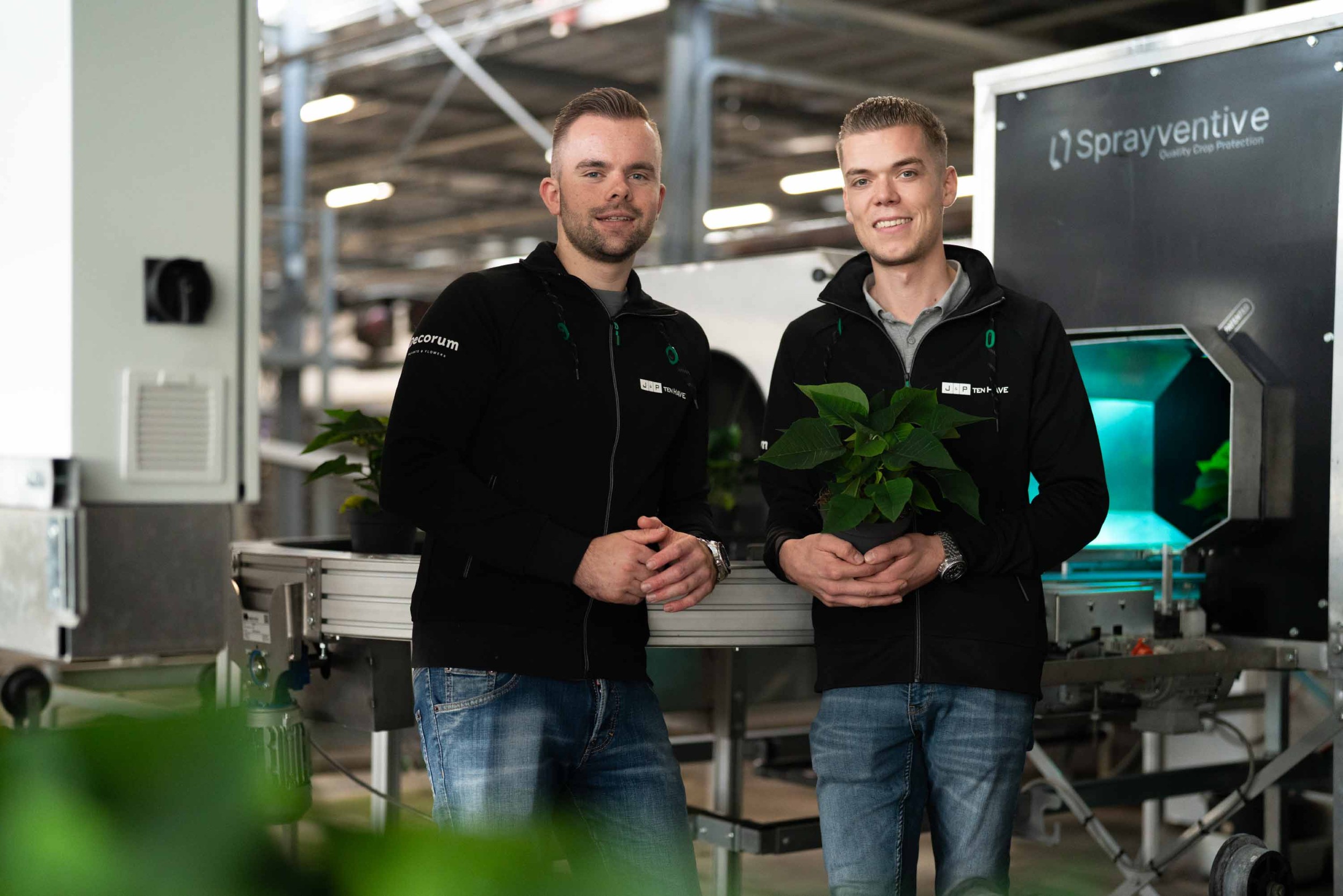
Alex: "It started more or less by accident. We used growth regulators to even out the growth of our plants. But those chemicals are facing considerable opposition. I thought, 'Surely there must be another way to do this?' Spraying plant protection products could also be better, in my opinion. This is because the spraying robot sprays onto the plants from above. As a result, this has a scattergun effect and, as a result, the sides of the plant receive very little coverage. As an alternative to growth regulators, I experimented with a UVC lamp. At the time, I had no idea what the effect would be; I soon noticed however that treating our plants with this lamp helped them to better retain their shape. Our use of growth regulators has dropped by at least 50% in recent months. A huge drop. And there's more: the lamp also has a fungicidal effect."

“Coincidence led to more sustainable cultivation”

MEMBER SPEAKING

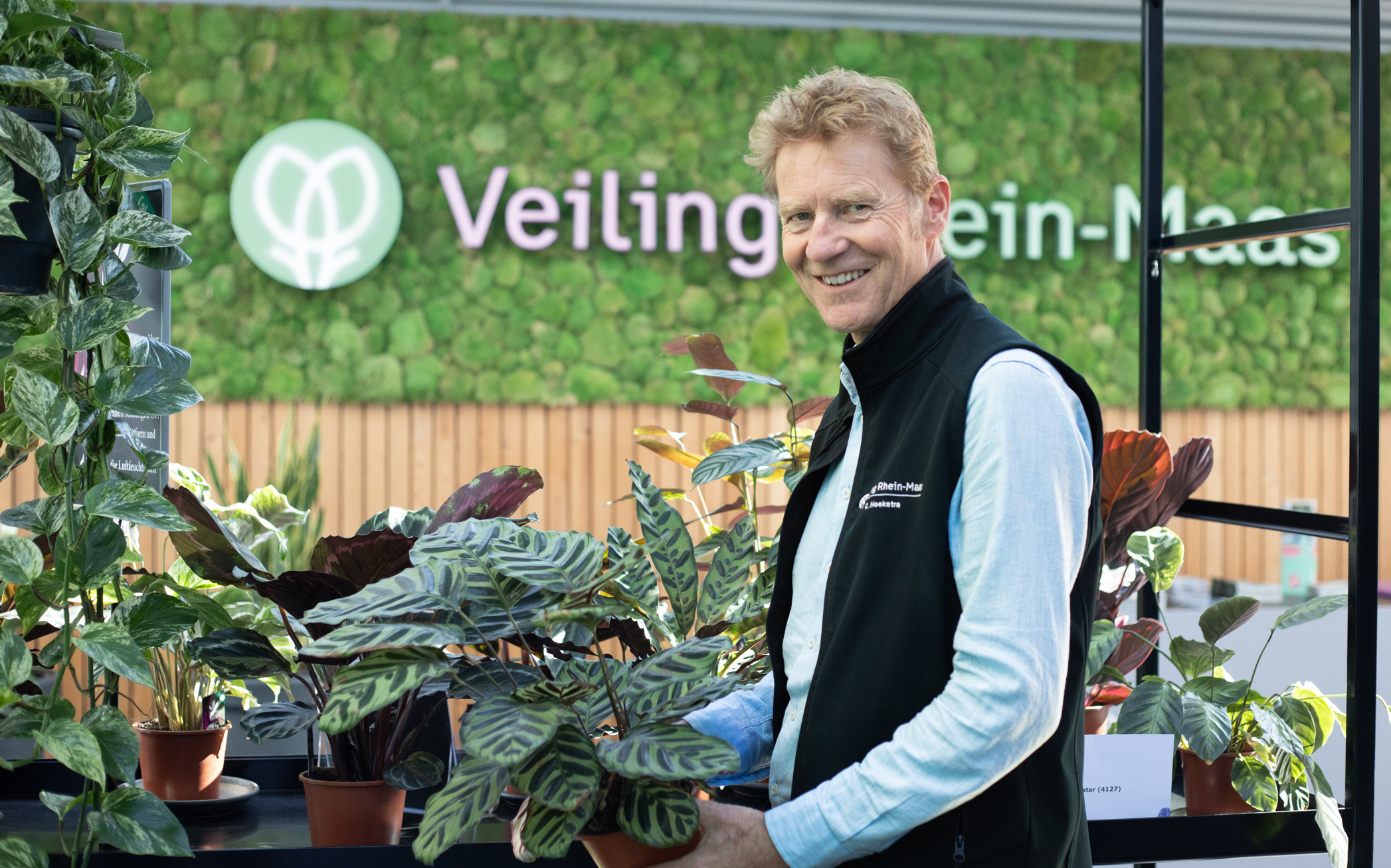
Alex ten Have en Frank Vreugdenhil

J&P ten Have

Frank: "SPRAYVENTIVE combines inventive technology with the ability to prevent pests and fungus. The name itself comes from a combination of the words 'spray', 'preventive' and 'inventive'. We launched a brand and patented our process. Yet we had no immediate intention of marketing SPRAYVENTIVE. However, we soon got in touch with growers who were interested in our process and curious to see how it would work for their plants."

Alex: "The interest from others is certainly there, but there are also growers with healthy dose of trepidation. We will therefore spend the coming period on further developing our machine so that we have an even better grasp of what we are doing. Good colleagues and close growers help us with this. Each plant has its own characteristics, so we are currently testing what effect UVC light has on different plants. How long should the plants be exposed to it and how often? What is the lower limit and what is the upper limit? And what happens when combined with other biological stimulants? The best thing is if at some point we discover the ideal amount of UVC light needed for each crop."

Frank: "The Sustainability Award also involves collaboration with a marketing agency. For us, it's clear: we don't need a big marketing campaign right now. It's too early for us to attempt something like that. However, they can help us with a communication strategy for SPRAYVENTIVE so that we have a better idea better of what to say and how to do it. This is how we reach growers interested in our machine. But at the end of the day, it is product that has to prove itself."

Alex: "I think with SPRAYVENTIVE we can make a good contribution to making floriculture more sustainable. With this, we can demonstrate how we barely have to use any plant protection products, and, for what products we do use, how we spray these very specifically and preferably using organic products."