Members have their say

How are you investing in the future?

The future is not later, it's now. This is especially true for business owners. If you want to be well prepared for the future, action is needed now. How do you go about this? After all, no one has a crystal ball. André Lankhaar (Lankhaar Nursery), John van der Slot (Floral Colors) and Bart van Kester (Qualily) discuss this in Members Talk.

MEMBER SPEAKING

André Lankhaar

Lankhaar Nursery

“We'd rather work smart here than hard”

André Lankhaar first saw the light of day at his parents' flower farm. He knew from an early age that his future lay in the nursery trade. In 2002, he started Kwekerij Lankhaar, together with his wife Petra. They are specialists in Kalanchoe genetics, selling cuttings to fellow growers. Full-grown Kalanchoe also pass over the counter, but this is a relatively small part of the total production.

"For me, something is only a real success when I can share it. That is the common thread in everything I do. We chose the Kalanchoe when we started our business because you can plan this plant well. You know what you are getting. Later, we also started breeding. Our motto was and is: keep it simple. We go for plants with a sustainable, stable base. Products that you can grow with the least possible art and skill. Now we have a variety that looks the same for 12 months: the same number of buds, the same flower. We sometimes say: people should be able to order from us with their eyes closed. Trusted to be good.

That is our strategy and vision. It's not so sexy, but it's obvious. No exceptional varieties, just exactly the plant and quality you expect. That does not mean we're standing still, by the way. We continuously refine and test. In doing so, we listen to the customer. In this way, we strive to set a standard for our regular customers. We demonstrate how it can be done — take a look! Over the years we have evolved into being more of a supplier to other growers. And that's fine. I want to share what we do with as many people as possible. I am a great believer in that.

For me, investing in the future also means investing in operations. We are doing a lot in terms of robotisation and automation. For example, we recently introduced a fully automated delivery system which sorts, picks up and places plants on a trolley. Above all, our staff must pay close attention to what is happening and ensure that quality control is maintained. As I always say, we prefer to work smart rather than hard. A pleasant collaboration based on mutual respect. Thirty per cent of people at this business were not involved in the labour market. They walk around here now and are proud of the work we do together. Building people, bringing life. They are proud of what they do here and have gained self-confidence. And I am proud of them. I am a Christian. I pray for blessing and to pass on blessing. That is what guides me in my life and entrepreneurship. This is how I invest in the future. Right now, my two children are just starting out in the company. Investing in the future for me means: making sure that what I do always makes someone else better too."

MEMBER SPEAKING

John van der Slots

Floral Colors

“Investing in the future means doing what feels good”

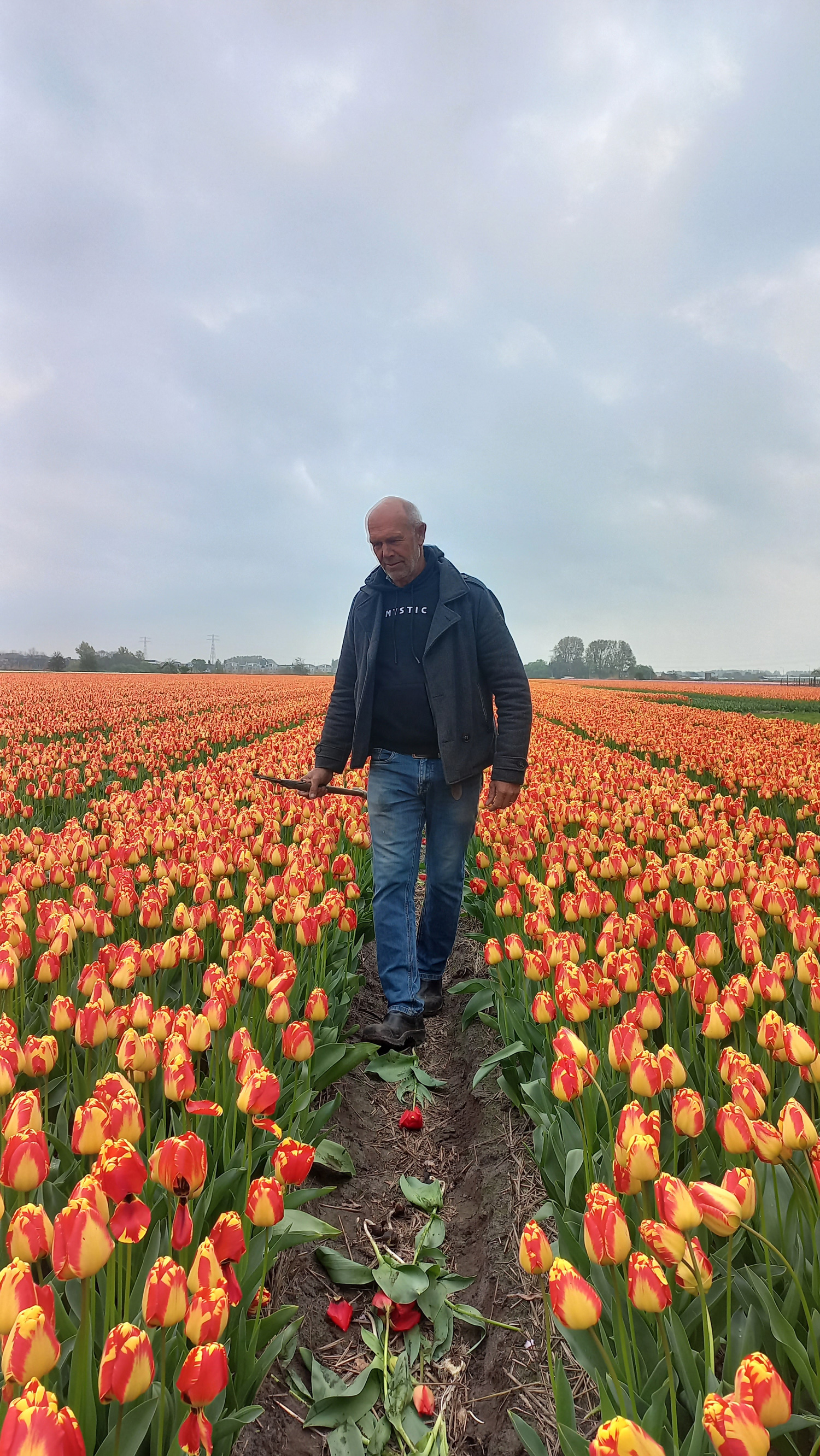
John van der Slot's nursery originated over 100 years ago. The instigator was his grandmother Dorry, who was only willing to marry cattle farmer Jan van der Slot if he went into the floriculture business. And so it happened. Gebr. J. & W. van der Slot became Floral Colors three years ago and specialises in growing and forcing daffodil, hyacinth and tulip bulbs.

"Moving with the different seasons, here, at the nursery. For me, that is the most beautiful thing there is. Everything has its charm: the fields full of flowers. Sorting the bulbs. Satisfied customers. That you work really hard with a large group of people to prune the plants. I have regularly had boys and girls in the nursery in recent years who were struggling. Working here gave them a push in the right direction. Sometimes, years later, I come across them again. Then you have a chat and hear how far they have come. For me, that is also investing in the future.

Meanwhile, for me, the clock is ticking. I am 64 and have been working at our nursery all my life. I don't like standing still. I always consider the market, innovations and sustainability. For example, we are now building a new hall and are becoming more and more sustainable. For example, we participate in regional certification, together with other growers, the water board and the government. To me, that makes sense. The soil is the breeding ground for our bulbs. Of course we want to take good care of it. I think it is important to show this to the outside world. Judgements are made too easily. The focus is often on what is going wrong, even though the environmental impact is now much lower than before. It's fair to make that point. Now, whenever we add a new tulip variety to our range, we choose one that is more vigorous and uses fewer chemicals. We used to look mainly at the colour. Now we are downsizing. Instead of five red and seven yellow varieties, we now offer two. And these are then stable varieties, for which we hardly use crop protection. Investing in the future means doing what feels right as a business owner and looking closely at what is happening in the market. By showing what we do as a nursery, I am investing in the future of our industry."

“You can't run a business alone anymore”

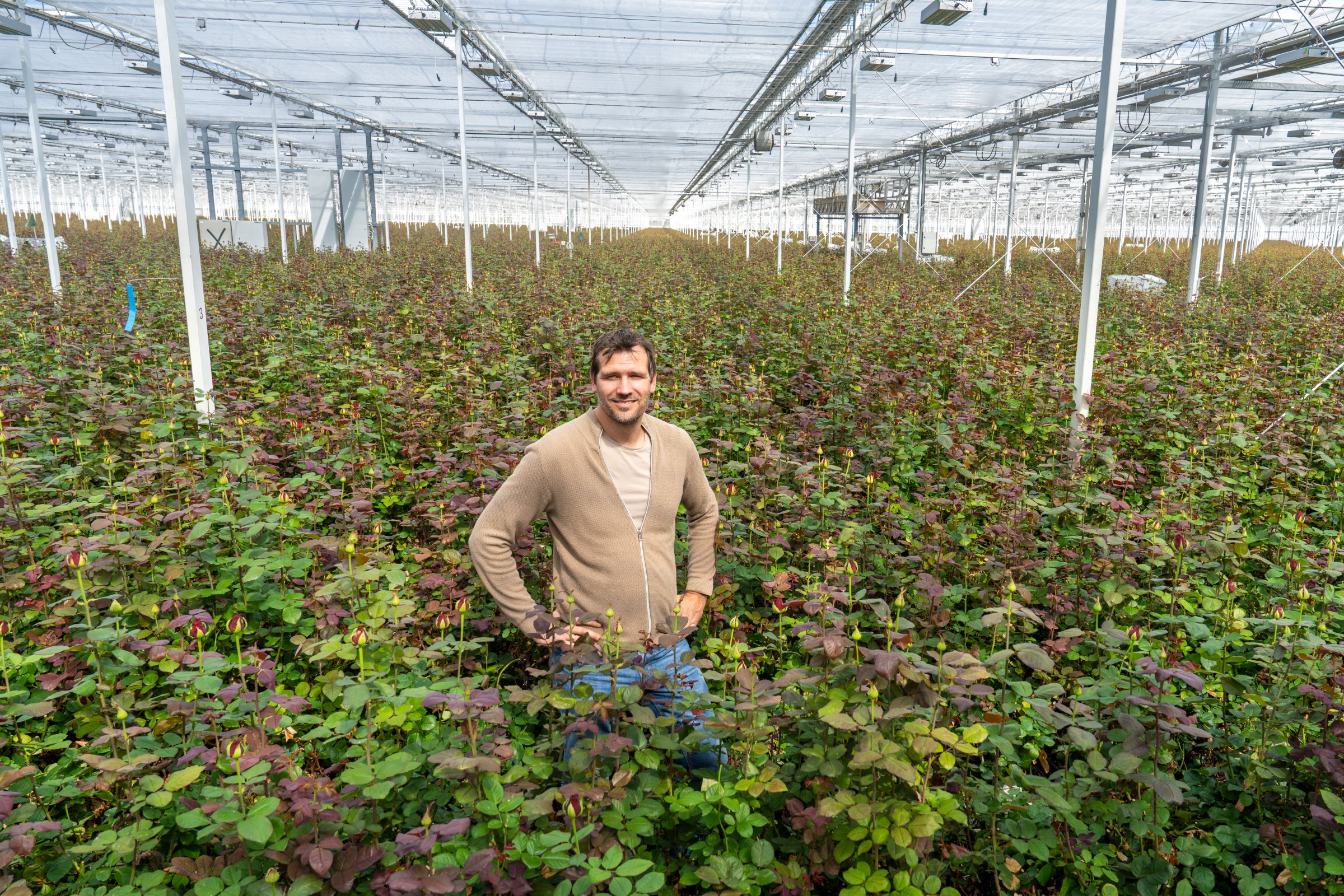
Bart van Kester loves the dynamics of the grower's trade. He is energised by internationalisation, innovation and sustainability, and by moving with and responding to the market. He now puts that energy into Qualily, a lily farm with five locations.

"I grew up among chrysanthemums. In fact, my father and uncle had a chrysanthemum nursery in Kwintsheul. I knew at a young age that I wanted to go into floriculture. However, I wasn't yet sure whether taking over the business was right for me. Things used to be more monotonous: working very hard in the garden to ensure the lowest possible production costs and the highest possible prices pn the clock. Meanwhile, the world has changed. So about five years ago, I became co-owner of the family nursery. After several years, my father and uncle indicated that they wanted to step back. However, given the recent developments in our industry, I couldn't see the point in doing it alone. Therefore, I started looking for the right cooperation partner with the help of a consultant. That's how we eventually got in touch with Ruud and Raymond, owners of Qualily who were looking for a location to centralise their LA crop. Following some productive discussions, we agreed to collaborate in lily farming. Our garden in Kwintsheul became part of Qualily as a result.

Saying goodbye to the crop my family grew for many years and joining another company may sound like a bold, exciting development. Nevertheless, it was an investment in the future that I had to make. Quality was like a moving train, with everyone focused on their own responsibilities for running the business. Exactly the dynamic I love. This is where I can grow, and where my colleagues and I can focus on what matters to us.

And of course: it takes some getting used to. Getting used to a new product, and a wide range of varieties year-round. Getting used to each other, as companions. I did not know Ruud or Ramon, and our ages differ. We are getting to know each other better and better. This is how we will ensure that Qualily grows steadily in the coming years. More lilies, but with the same high quality and good service that our customers have come to expect from us. So for me, investing in the future also means doing what feels right, based on what I learned over the past few years. Even if our path might not be a common one."

MEMBER SPEAKING

Bart van Kester

Qualily